
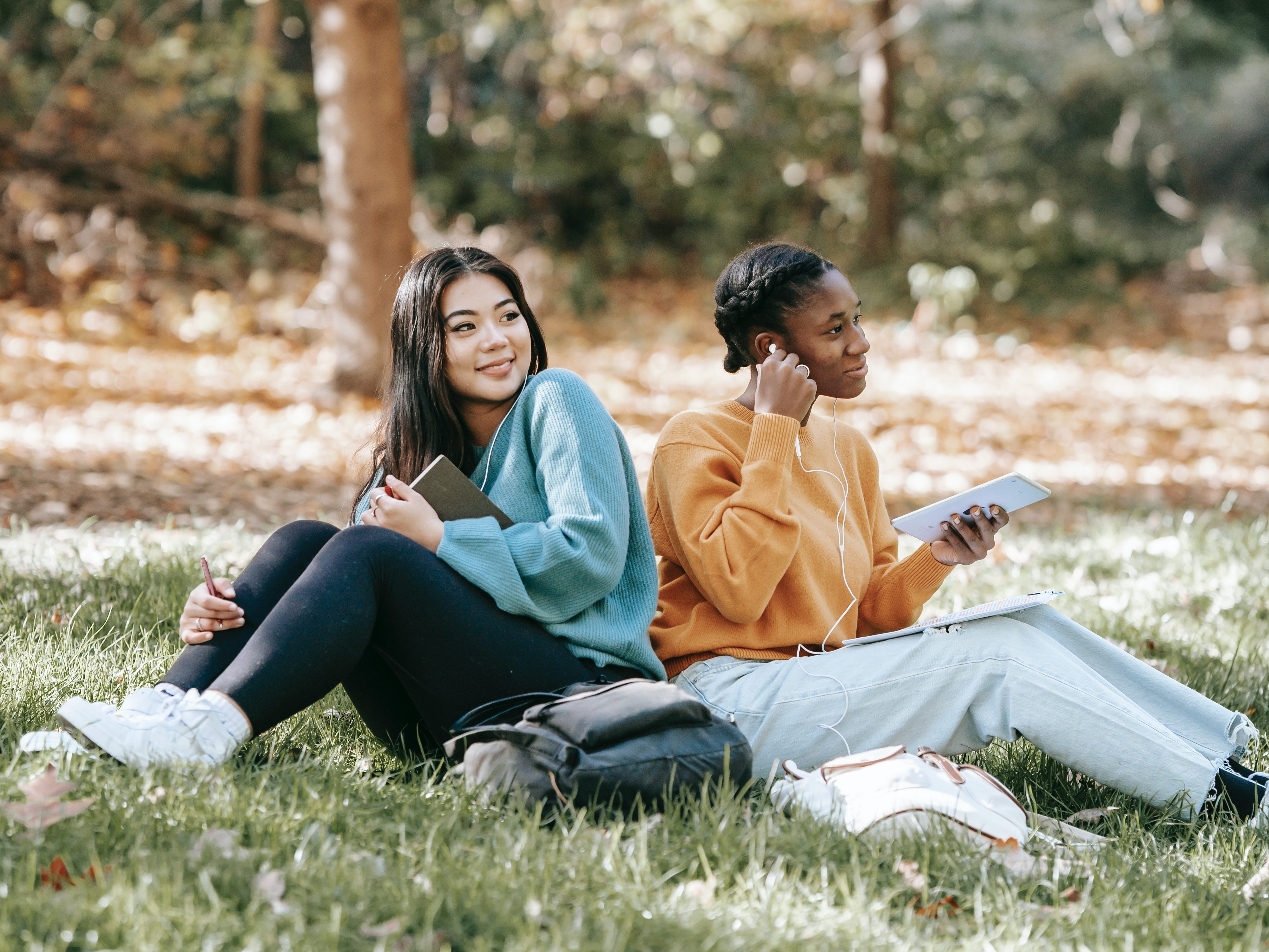
Connected to Flourish offers educational programs that connect participants with the natural and technological worlds. Our approach involves community-based and project-driven lessons that nurture literacy—skills, wisdom, and confidence. Programs include experience-rich activities such as exploring, observing, sharing stories, engaging the community, building relationships, creating art, solving challenges, and reflecting. Participants walk away from programs with improved ecological and technological literacy and the skills and wisdom to help the planet flourish.
What does this all mean?
Here are some key term:
Ecology looks at living beings, their relationships with each other, and how they interact with the world around them. At Connected to Flourish, we approach ecology using a traditional ecological knowledge (TEK) philosophy. TEK thinks of knowledge, practices, and beliefs as essential in our relationship with the Earth. Valuing traditional knowledge is why we explore ecology and technology through experiential programs, observation, multiple ways of knowing, community engagement, and reflection.
Technologies are tools designed to help achieve goals.
Humans have been innovating for millions of years by applying knowledge, experience, and creativity to enable survival (and flourishing). There are a lot of technologies to explore—from recent developments like satellites and smartphones to millennia-old innovations like aqueducts and hand axes. At Connected to Flourish, we recognize the rapid acceleration of technology today, and we want our communities to participate in these innovations. Still, we value and explore technologies from many ways of knowing so that we may develop and use technologies appropriately.
Ecological and technological literacies are the understanding of the natural (ecological) and designed (technical) worlds and the ability to work in them. At Connected to Flourish, these literacies develop through experiencing, using, creating with, and reflecting on nature and technology. In building these literacies, our communities can address ecological, social, technical (and even personal) challenges.
Community-based education is a core part of the Connected to Flourish approach because we believe cultural and social experiences shape our relationships with the world around us. We run programs in and with communities. Communities could be place-based (like a neighbourhood), share an identity, or have a shared intention (like helping reduce poverty and hunger). We also think of community as the natural living systems in and around us that include all levels of life.
Project-driven education invites participants to apply their knowledge and practice lessons. Projects are tangible creations that give back to communities. Examples of projects include creating a song, planting a garden, or building a weather station.
References
Agar, Jon. “What is technology? Technology: critical history of a concept.” Annals of Science 77, no. 3 (2020): 377-382.
Berkes, Fikret. Sacred ecology. Taylor & Francis, 1999.
Born, Paul. Deepening community: Finding joy together in chaotic times. Berrett-Koehler Publishers, 2014.
Kimmerer, Robin Wall. “Weaving traditional ecological knowledge into biological education: a call to action.” BioScience 52, no. 5 (2002): 432-438.
Sarkar, Sahotra and Alkistis Elliott-Graves, “Ecology”, The Stanford Encyclopedia of Philosophy (Winter 2016 Edition), Edward N. Zalta (ed.), https://plato.stanford.edu/archives/win2016/entries/ecology/.
Wikipedia contributors, “Technology,” Wikipedia, The Free Encyclopedia, https://en.wikipedia.org/w/index.php?title=Technology&oldid=1130423460 (accessed January 11, 2023).
 Connected To Flourish